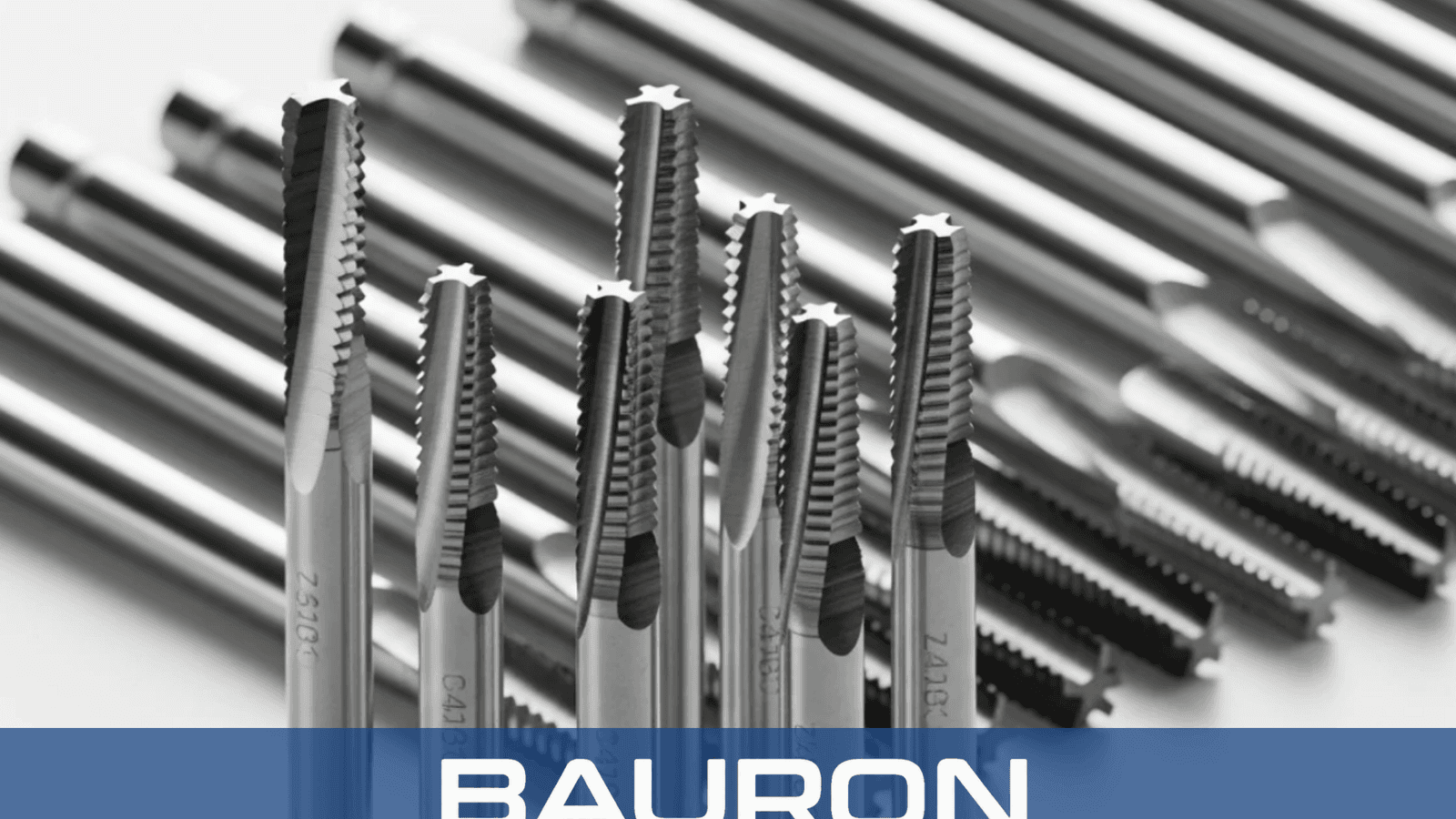
Easy Entrance
The narrow initial teeth guide the tap into the pre-drilled hole and help limit binding or cross-threading.

Taper taps are thread-cutting tools characterized by a long, gradual chamfer across the first 7 to 10 threads. Often used first in a three-tap set, the tapered lead distributes the cutting load across multiple teeth and reduces the torque needed to begin an internal thread.
The narrow initial teeth guide the tap into the pre-drilled hole and help limit binding or cross-threading.
Each successive tooth cuts slightly deeper into the wall as the tool advances.
The extended chamfer helps keep the tap aligned with the hole axis.
Straight, spiral-point, or spiral flutes direct chips away from the active cutting edges according to the selected geometry.
A 7-to-10-thread lead chamfer spreads the cutting load and makes the initial cut easier to control.
The gradual lead helps center the tap along the prepared hole axis.
Distributing the cut across more teeth can reduce breakage risk when geometry and operating conditions are properly selected.
Appropriate grades and geometries can cut aluminum, mild steel, stainless steel, and cast iron.
Pitch, diameter, flute geometry, shank length, and coolant delivery can be specified for application-specific threads.
| Specification | Range / Details |
|---|---|
| Diameter Range | #0 to 2"+; metric M1.6 to M50+ available |
| Chamfer Profile | 7 to 10 tapered lead threads; 4° to 5° taper angle |
| Thread Forms | UNC, UNF, metric, NPT, BSPT, and custom pitches |
| Flute Geometry | Straight flute, spiral point, or spiral flute |
| Shank Type | Standard square drive or straight cylindrical |
| Tolerance | GH and H-class precision options |
| Material / Coating | Best For | Key Advantage |
|---|---|---|
| HSS (High-Speed Steel) | Mild steel, brass, aluminum, and general tapping. | Impact toughness helps resist chipping in manual and machine use. |
| Cobalt (HSS-Co) | Stainless steel, titanium, and high-temperature alloys. | Improved hot hardness helps retain the cutting edge under elevated temperatures. |
| TiN / TiAlN Coating | Higher-volume CNC production. | Added surface hardness and lower friction can reduce galling at the thread-cutting edges. |
HSS provides toughness for general tapping, cobalt improves hot hardness in demanding alloys, and TiN or TiAlN coatings can reduce friction and galling in production use.
Use rigid tapping cycles for repeatable through-hole thread production.
Hold taps in tailstocks or live-tool turrets for axial internal threading.
Use suitable tap holders to control depth and alignment.
Provide direct operator control for gradual hand-thread starting.
Cuts internal threads in open-ended holes where the long lead has room to pass through the workpiece.
Establishes aligned lead threads before a plug or bottoming tap continues a blind-hole operation.
Reduces initial cutting force when starting threads in high-tensile alloys with application-matched geometry and cutting conditions.
Supports hand tap wrenches and controlled machine-tapping cycles.
Chamfer length is the main distinction. Taper taps typically have 7 to 10 lead threads, plug taps 3 to 5, and bottoming taps 1 to 2 for threading close to a blind-hole floor.
A taper tap leaves several incomplete threads near the bottom because of its long chamfer. A plug and then a bottoming tap may be used when full threads are required closer to the hole floor.
Custom taps are useful for non-standard pitches, unusual thread profiles, extended shanks, specialized flute forms, or coolant-through requirements.
They can be suitable when substrate, geometry, coating, lubrication, speed, and pilot-hole size are matched to the stainless grade. The long chamfer helps distribute the cutting load.
Application-specific options can include thread geometry, pitch, shank reach, flute design, carbide-tipped construction, coatings, and coolant delivery.
Bauron provides design and engineering support for custom thread geometries, flute forms, shank configurations, and application-specific coatings. Share the workpiece material, thread requirements, and process conditions for technical review.
Talk to Engineering